
Ministry of Oceans and Fisheries

Multi-network maritime gateway for autonomous ships, developed and tested on a long-haul route

About the customer

The Ministry of Oceans and Fisheries and KIMST, which ran the Korea Autonomous Surface Ship (KASS) project

The Ministry of Oceans and Fisheries and the Korea Institute of Marine Science & Technology Promotion (KIMST) ran the Korea Autonomous Surface Ship (KASS) project. From 2021 to 2025, within its task on data exchange and communication technology for autonomous ships (Ship2Ship2Shore), SyncTechno developed core technologies for maritime broadband communication and carried out international standardization work on communication technology for autonomous ships.

Challenge

Ships moving between coastal and open waters needed to stay connected to shore centers

An autonomous ship's onboard digital bridge has to exchange data with the digital twin bridge at the shore center. Commercial LTE/5G networks are available near the coast, but VSAT satellite networks are needed in open waters. Both networks had to be operated together while the ship sailed long routes from Korea to Southeast Asia, and we needed to understand how communication quality changed along each leg.
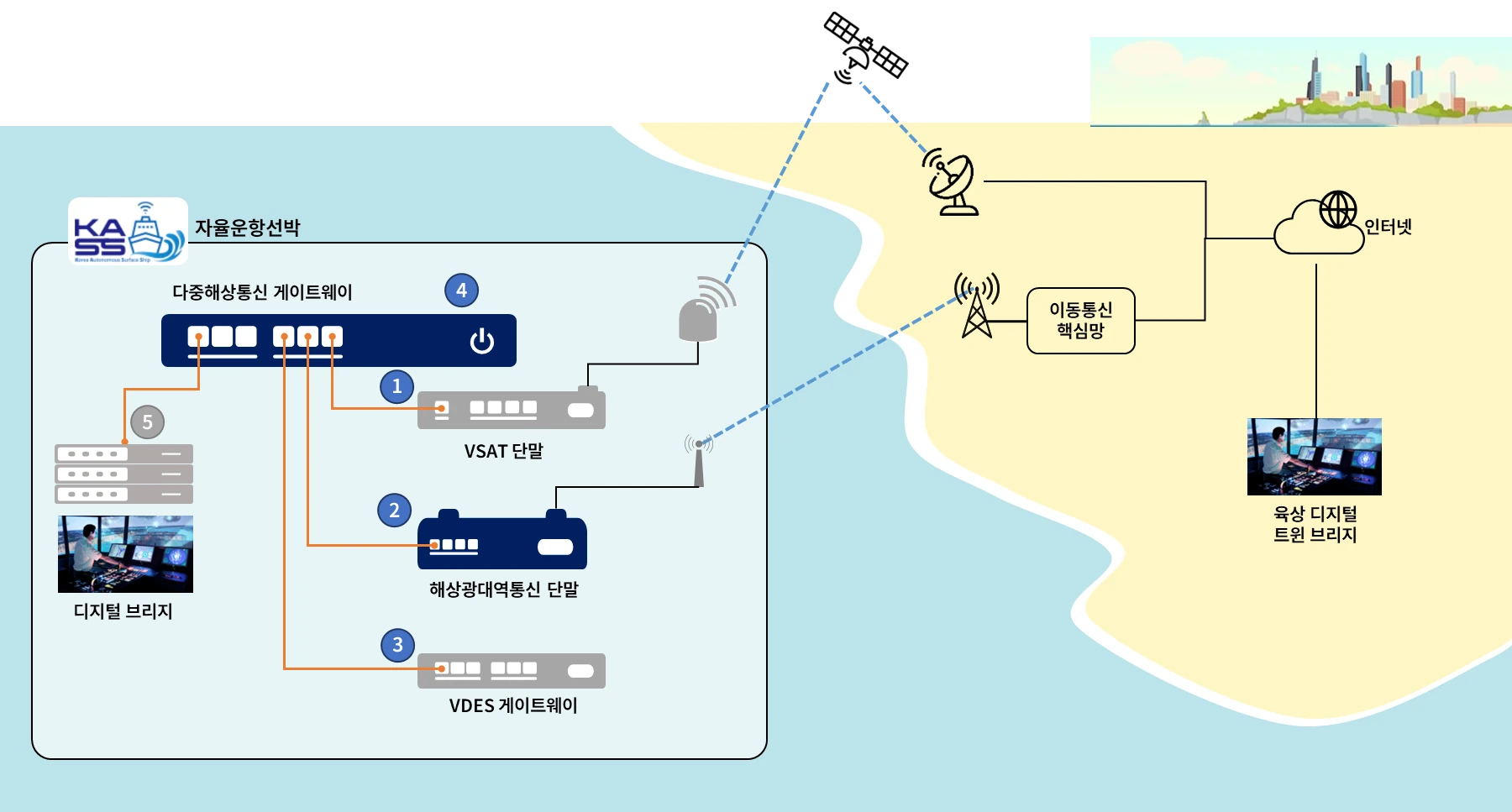
KASS autonomous ship communication setup: multi-network maritime gateway with VSAT, LTE/5G and VDES terminals and the shore digital twin bridge
KASS communication setup
Solution

We combined satellite and LTE/5G networks in a single gateway

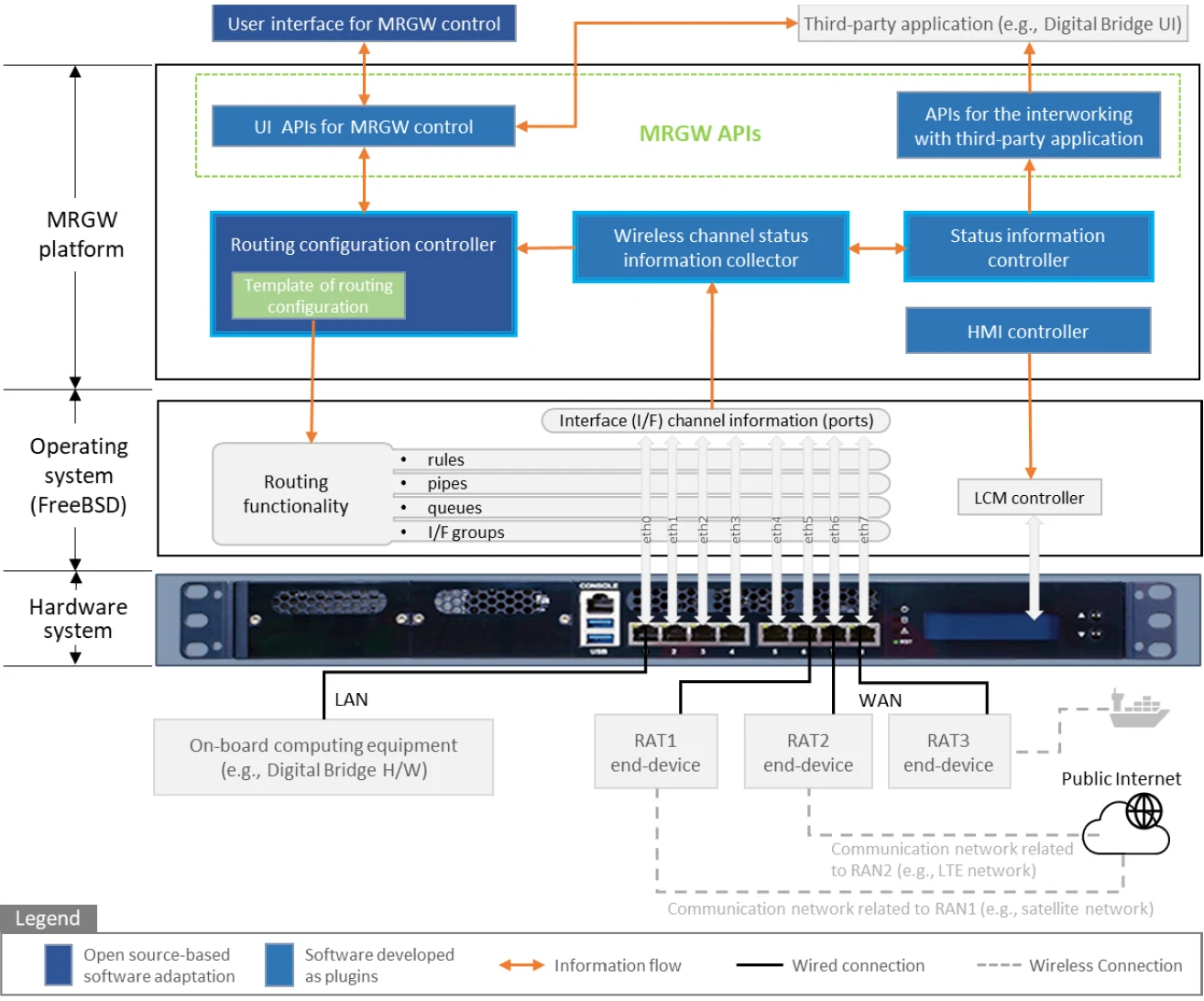
Applying the 3GPP ATSSS (Access Traffic Steering, Switching, Splitting) concept, SyncTechno developed a multi-network maritime gateway that supports multiple radio access technologies (Multi-RAT). ATSSS steers, switches or splits traffic across multiple networks. We also upgraded the LTE/5G maritime broadband prototype used with the gateway for the test ship environment.

  1. 01Multi-network maritime gateway

    Integrates commercial VSAT satellite and LTE/5G networks to connect the ship's digital bridge with the shore center's digital twin bridge.

  2. 02LTE/5G maritime broadband prototype

    Connects to commercial LTE/5G mobile networks in conjunction with the multi-network maritime gateway.

  3. 03Communication quality by voyage leg

    Measured and analyzed commercial mobile network quality with the prototype to build a wireless quality roadmap along the test ship's route.

Functional architecture of the Multi-RAT maritime gateway
Outcome

We verified combined satellite and mobile operation on the Korea–Vietnam–Thailand route

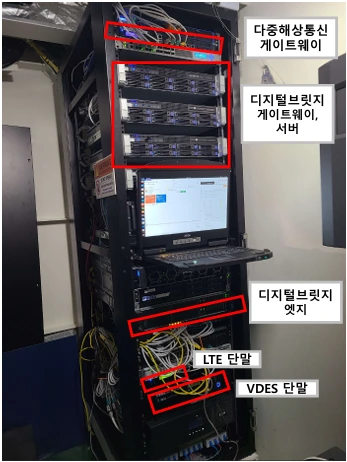
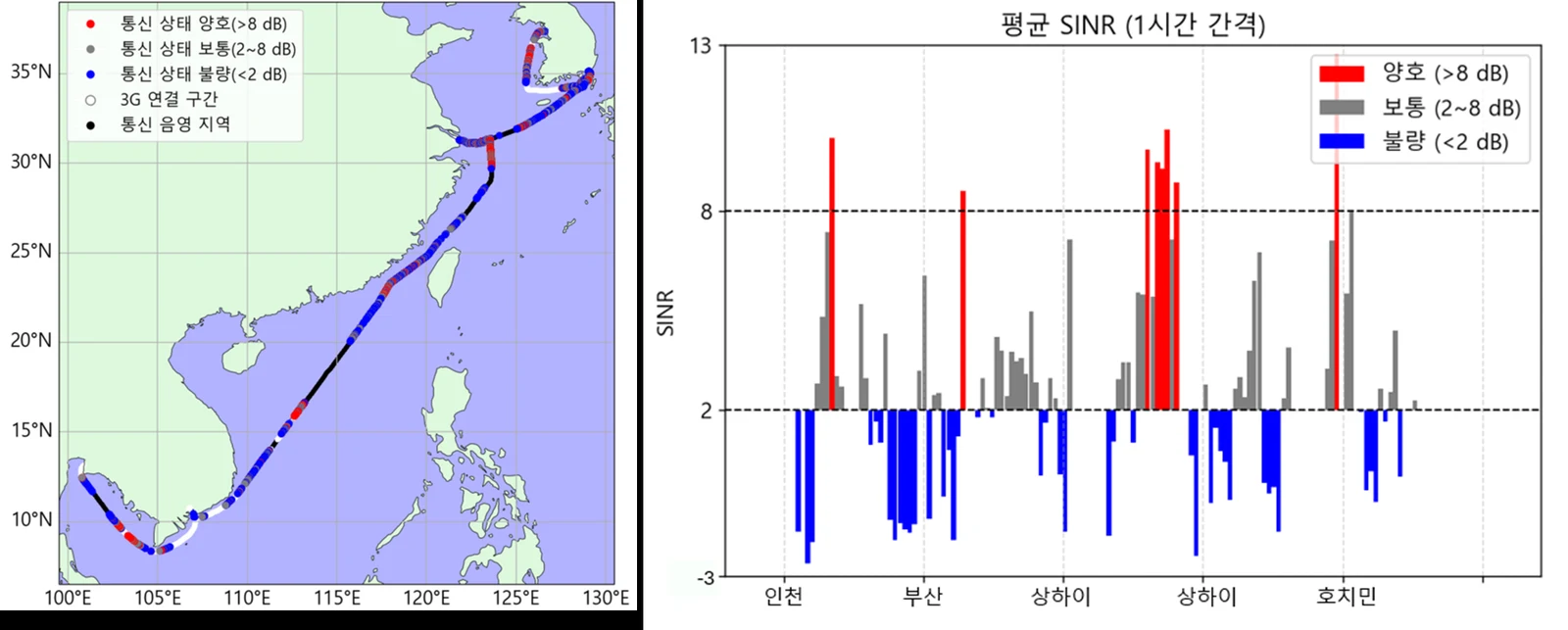
We installed the multi-network maritime gateway and the LTE/5G prototype in the equipment rack of the autonomous test ship. From July 2024 to December 2025, we tested simultaneous operation of commercial mobile networks (including international roaming) and commercial VSAT satellite networks along the long route sailed by the test ship: Korea (Incheon and Busan), China (Shanghai), Vietnam and Thailand. The gateway passed interworking tests with a VSAT terminal (iDirect X7) and obtained a test report from an accredited testing laboratory. In a measurement at Incheon New Port on 11 August 2025, the upgraded LTE/5G terminal measured 210–380 Mbps, compared with 12–19 Mbps for the previous version.

Multi-network maritime gateway installed on the test ship
Communication quality measured along the trial route
Research and standardization

Research papers and international standardization from the KASS project

The project results were carried into international standardization. We presented 23 contributions to ITU-R, IALA and 3GPP on mobile communication standards that reflect the maritime environment of autonomous ships. We attended ITU-R WP5D meetings as a Korean and IALA delegate, and maritime IMT use cases including the gateway research were reflected in the revision of ITU-R Report M.2527, scheduled for approval and publication in December 2026. In the IALA DTEC committee, we led the creation of an IMT-2030 (6G) task group and chaired it. In December 2021, Dr. Hyounhee Koo received a Minister of Oceans and Fisheries commendation for contributing to smart maritime logistics under the national smart oceans and fisheries strategy.

1Applied Sciences · 2026

Repeated-Voyage Measurement of Cellular–GEO Satellite Complementarity and Buffering Implications for Maritime IoT Backhaul

Repeated-Voyage Measurement of Cellular–GEO Satellite Complementarity and Buffering Implications for Maritime IoT Backhaul

Summary

Analyzes 606,625 georeferenced records collected on a container ship over 12 voyages in nine months between Korea and Southeast Asia. During sailing, only 28.0% of cellular records met the received power criterion, ranging by leg from 77.1% (Incheon–Busan) to 17.3% (Shanghai–Ho Chi Minh). During VSAT service, either the cellular criterion was met or a satellite response was observed in 99.4% of records. Raising the VSAT SNR threshold from 6 to 7 dB increased the store-and-forward share from 6.7% to 25.7%.

DOI: 10.3390/app16189361

2Journal of Marine Science and Engineering · 2023

Simultaneous Utilization of Multiple Radio Access Networks in Ubiquitous 6G Connectivity for Autonomous Ships: Opportunities and Challenges

Simultaneous Utilization of Multiple Radio Access Networks in Ubiquitous 6G Connectivity for Autonomous Ships: Opportunities and Challenges

Summary

A review of communication technologies in 3GPP standards, aimed at preparing 6G connectivity for autonomous ships. It analyzes how mobile radio access entities such as satellites and UAVs are integrated into 5G-and-beyond systems, and the ATSSS feature that lets a device use multiple networks at once. It also sets out open issues for 6G standardization, including integrating legacy maritime communications and the variability of maritime channel measurements.

DOI: 10.3390/jmse11112106

3Sensors · 2023

Design and Experiment of Satellite-Terrestrial Integrated Gateway with Dynamic Traffic Steering Capabilities for Maritime Communication

Design and Experiment of Satellite-Terrestrial Integrated Gateway with Dynamic Traffic Steering Capabilities for Maritime Communication

Summary

Designs and implements a multi-RAT gateway that combines LTE and VSAT satellite access, with access traffic steering, switching and splitting (ATSSS) between them. The gateway collects radio channel information from each network terminal and passes it to the digital bridge system of an autonomous ship. Experiments at sea near Ulsan and at the Kumsan satellite service center showed that it can deliver the minimum performance needed by autonomous ships.

DOI: 10.3390/s23031201